High Intelligence, High Manual Performance, High Risk

“He’s so knowledgeable and such a hard worker.” The woman took a sip of her coffee. “We’re fortunate to have him as our handyman.”

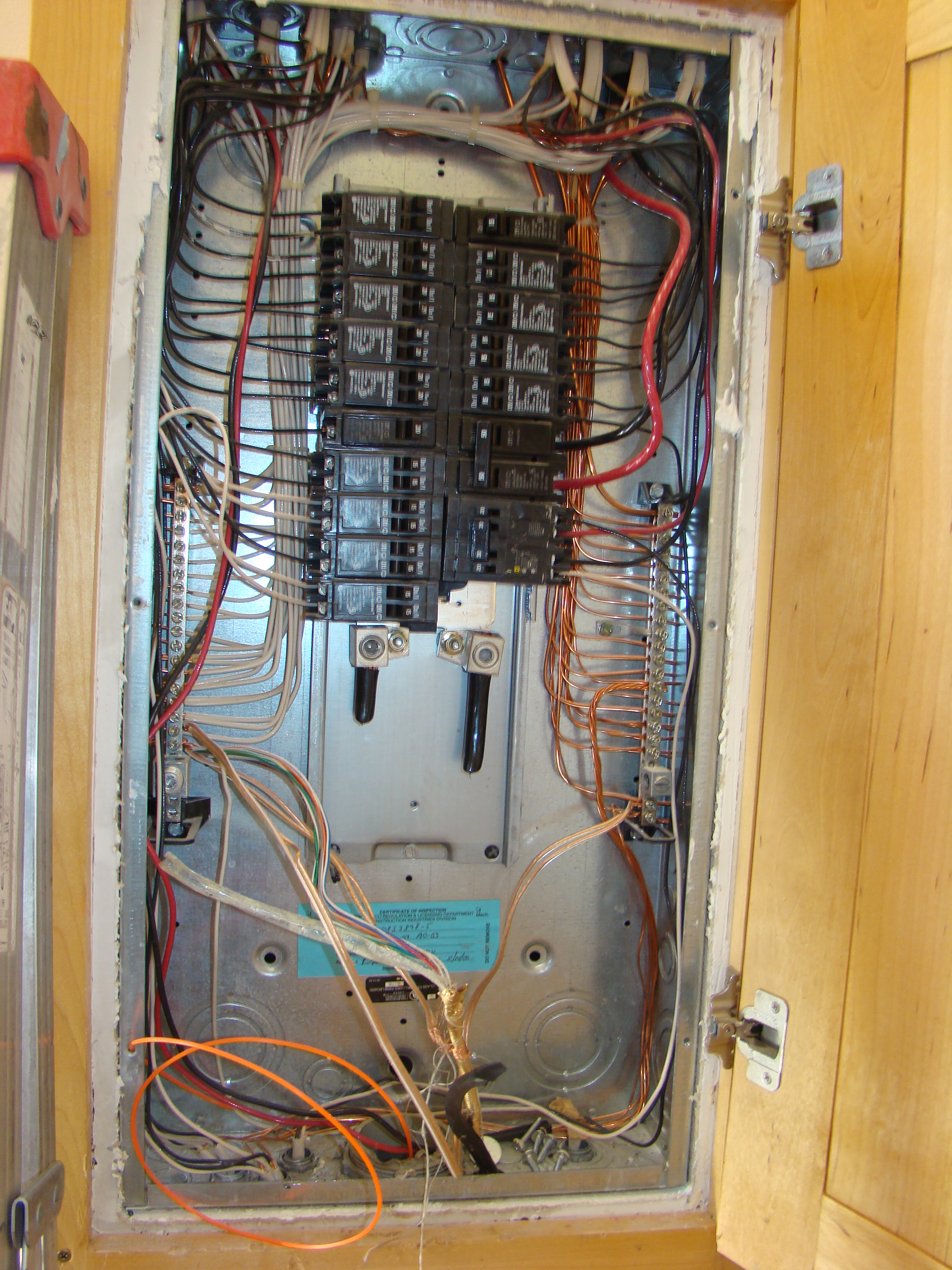
I didn’t post this last week because this knowledgeable, hard worker, who lived in my friend’s vacant home for the last six weeks, stripped the wiring from her house so his eighteen year old son could sell the copper. They also stole her Navajo Rug, sterling silver, jewelry, and tools from her and his employers–about $40,000 worth.
What’s heart-breaking isn’t the lost of material goods but the personal theft of our inherent trust.

This soft-spoken man read the same books as his employers, he asked questions about their interests, and he helped to care for their sick relative.

At night he went home to my friend’s house and mixed up his batch of meth so he, his son, and friends could shoot up and feel good about their life.  During the day, he told everyone he was undergoing radiation for cancer treatments. We believed because he looked sickly. We cared, because he seemed to care, and, yes, he did know how to do electrical work, repair roofs, garden, do house renovations, and he read books.  Books!

He came into our lives because he didn’t have a job, he didn’t have a place to live, his life was sparse, and he was sick.

We trusted, we trusted for over a year. Then the waters of deception were stirred by an unexpected event. His son accidentally set a shed on fire. They panicked and then tried to get an alert bank teller to cash a forged check.

We had an ideal perception about this down-trodden man and we behaved accordingly, without judgement, with compassion, and altruism.  We didn’t know there were warrants out for his and his son’s arrest in two states.

Now I’m on first name basis with our county sheriffs after this last week. I know how to fill out a report for a judge that will produce search warrants, I know what it takes for a crime to be considered a felony, I know the adrenalin rush when you’re staking out a place where the perps may be hiding. I’ve seen the creepy physical world meth heads create for themselves with their strange hoarding of stuff.

This is an excellent experience for mystery writers, but it’s a bad experience for those of us who believe in the power of goodness.
Posted in Scheme Stalker | Tagged , , , , , , , , , | 2 Comments

Sky Magic and Writing

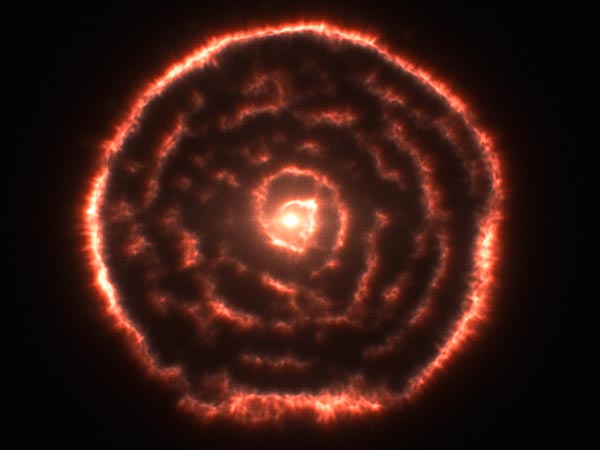
Astronomers found a surprise recently, but it triggered a prehistoric image for me. On October 10, 2012, the European Space Observatory, ALMA, released the photo of a mysterious pattern that surrounded an old star, R Sculptoris.

Space Image: National Geographic

This spiraling material made an unexpected appearance around that star.

A thousand years ago some ancient people climbed to a rather inaccessible place and carved a large spiral into sandstone.  It’s probably the image of the sun.

Unfortunately, the only relationship I can make to that ancient Anasazi design and the above photo is that they are both spirals of the sky.  You won’t find anything extra-terrestrial between that star activity and the watchers of the sun here. Still it doesn’t kill our fun. Like astronomers who dedicate their lives searching for mysteries in our sky, these Chacoans also searched the skies.

Their spiral has three huge slabs of sandstone, one over nine feet high, positioned in front of the rock carving. These slabs allows a slice of sunlight to connect with the carved spiral. This is the Sun Dagger of Fajada Butte.

Did these ancient people discover an ingenious method to track the seasonal movement of the noonday sun? Studies of prehistoric sun watching sites find this unusual. Ancient makers of other sun sites use the rising or the setting sun, not the mid-day sun. Come on, this is New Mexico, land of the siesta during the heat of the day.

If you decided to climb to the top of Fajada Butte in Chaco Canyon, NM, you’d discover the brutality of it all.

Wikipedia image

You’d have to be in prime condition (see link above) and you couldn’t be afraid to confront the nasty prairie rattle snakes who lurk in the sandstone crevasses.

We use our writing to communicate, inform, educate, and entertain.  Many believe the Chacoans used their writing on the sandstone cliff for survival. The sun dagger could tell them when to plant crops, or when the rains or snow might fall, or when to prepare for ceremonies or harvest. Yet, travel along their ancient ruins down the valley and you will find other sun markers and a drawing that some say is a depiction of the Crab Nebula, super nova.

How dedicated are we to what we’ve written compared to these ancient people?  Would we endure almost 100 degree temperatures to climb to the top of Fajada’s rocky face, dodging ill-tempered snakes, to see what the noonday sun has written for us?

Well, I sit and write for hours, days, weeks, and months. Then I hold my breath and send my manuscript to the editors. I turn blue in the face while I wait for them to send it back. And here’s the thing: I actually pay them to tell me what’s wrong and to assign me more frustrating hours at my computer.  Yep!  I’m dedicated.  Bring on the prairie rattlers.

What about you?

Posted in Pen Points | Tagged , , , , , , , , , | Leave a comment

Part III Revision: Push, Poke, or Press?

I have to tell you, this cake was good. By good, I don’t mean scrupulous, or righteous, nor do I mean proficient, talented, or adept. Of course not, that’s silly. This type good means yummy, delicious, and scrumptious.                                          cake                                                   Good, with it’s various meanings, subtly deprives us of our connection to our senses. We want our readers to taste this cake, feel the moist heaviness, and savor the deep chocolate on our tongues. We want to inhale its sweetness as we lift our forks to our mouths. Good fails to be good enough.

Think of this part of the revision process as going on a writing safari to find robust words that replace flimsy words. We want words that bring a deeper level of understanding to our readers so they can experience the exactness of each situation.

He pushed her into agreement. Push means to press forcibly. If the writer had used pressed then that means a steady force.  Maybe that works better for this scene.  But what about the word nudged?  Nudge means to gently push.  Here the writer needs to choose the shade of meaning that best fits the masculine character in this scene.

Guess what? My personal preference is none of the above. A line like the above would be more fun if it was turned into action so the reader could visualize how he went about getting her to agree.

Last week before I sent my manuscript off to my editors something niggled at me about a minor scene. I scrolled to the worrisome sentence. The protagonist’s boss wondered if something the protagonist had requested was too expensive.

That’s what I wanted to convey. But it still didn’t feel right. That statement on the surface seemed to shut the door on further discussion.

A subtle message was missing. The boss didn’t actually want to deny her the request. Because he felt pressed to cut costs, changing the word expensive to extravagant presented the reader with a different level of meaning.  Expensive equals high priced. Extravagant equals imprudent, lavish, or wasteful spending.

Wondering if something is too extravagant may hint to the reader that he might give more consideration to the request. If he does examine the merit of the request then the asked for funds might be granted.

These opportunities abound during revision if you hunt out watered-down words and replace them with more accurate words. When you do, you give your readers a chance to go deeper into your story with subtle shades of understanding.

Sigh. I wish I were a word smith.

What are some wimpy words you’ve replaced with richer, more accurate words?

Posted in Pen Points | Tagged , , , , , , , , , , , , | Leave a comment

Single-Function Items: A Creative Game

Do some things niggle at your mind until you’re force to examine them from all sides? Unfortunately, this is a common occurrence for me.

“Sorry I’m late.” I held up my watch for my friend to see. “It’s self-winding. My wrists were lazy this week.”

My arms don’t move a lot when I’m writing all day at the computer.

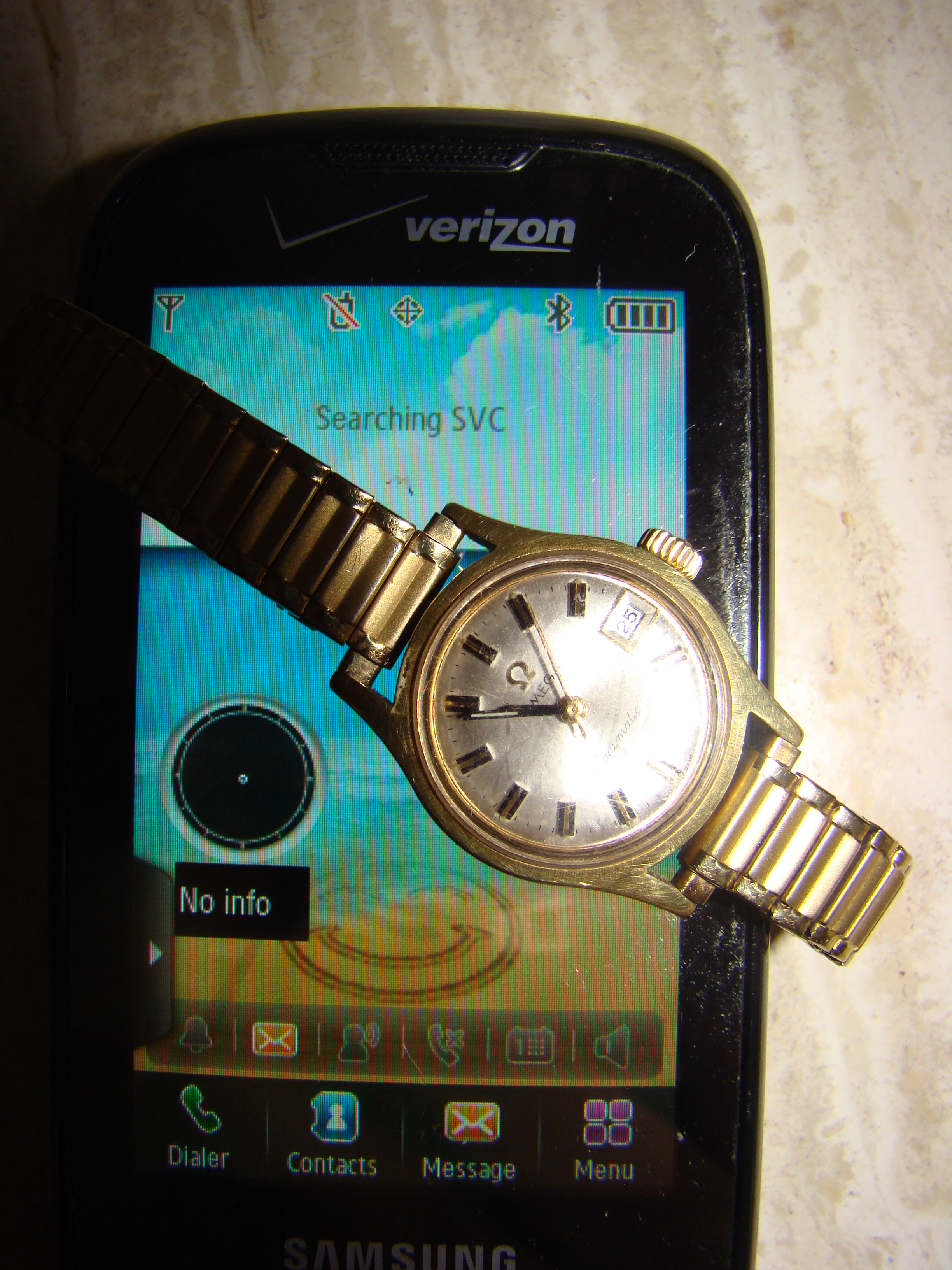
Old phone with older watch.

She laughed and said, “My kids asked me why I used a single-function item like a watch.  Everyone carries their smart-phones around now.” She’s right. They do. Even I’ve noticed that.

Have you even seen a Generation Y  person without their smartphone?

But then . . . is it that efficient? Some places are aptly called Cell Hell in rural New Mexico. My watch may be slow but it’s better than figuring out the angle of the sun.

A generational thing kicks in–in two parts:

Thanks, Wikipedia.

First part: Multi-use cell-phone

Dick Tracy had a multiple tasking watch in the late forty’s and added television to it in the sixties.   How many of you remember that? He was our true wireless pioneer, and he didn’t carry it in his pocket.  He wore it on his wrist.

Think about women’s clothes.  Even some jeans don’t have pockets big enough to carry a cell phone. And don’t you love it when a cell phones take on a life of its own–when it places calls to strangers. That usually happens after you’ve shoved it into some small place.  Cell-phone carriers either have to have a suitable pocket, carry a cell-phone friendly purse, or end up holding it all the time. Ugh.

If you’re the least bit hyper and find yourself multitasking how does using only one hand work for you?

Second Part: Single-Function Items

What exactly is a single-function item?

A  preserver of perishable foods becomes a photo album.

The Grandfather clock, is it a single-use item? It shows us the time but we also enjoy the sounds.

What about the closet? Guess where our dog goes when it thunders? Maybe that’s a good tornado shelter, too. Have you ever used a table knife as a screwdriver? How about a heel of a shoe to pound in a nail?

My spouse and I needed to carry a  ninety pound bucket of stucco compound quite a distance today.  I put a broom handle through the bucket handle and we both shared the load without strain.

Is there anything that truly has only one function?

I found myself looking around and wondering if anything existed that could be labeled a single-function item. Then Ms. Lucky L’ cat sauntered into my studio.

Ms. Lucky L’cat

She’s a killer-attitude cat who’s convinced me she owns at least one single-function item.

Do you agree?

L’cat’s Litter Box

I’m a utilitarian, and find unintended uses for many things. This skill is actually quite handy when your protagonist is in a tight spot without a weapon and the dastardly villain lurks around the corner. Have you used something other than a standard-type weapon to do in your protagonist? 

I’d love to hear what’s your favorite unintended use for a supposedly single-function item.

Posted in What if-- | Tagged , , , , , , , , , , , , | 2 Comments

Part II Revision–Three Dialogue Dilemmas

Three Dialogue Dilemmas

Writers find whipping out a short paragraph to make a point is much easier than putting the information in their characters’ mouths and having them talk about it.

Fall Foliage in Taos, NM

When you pick up a book with not much white space, you know it will be heavy with words and won’t be dialogue strong.

That’s because writers often prefer to avoid dialogue. It takes a different level of thinking and writing.

When you write a narrative about what’s happening, about what you want your readers to know, or to show them the story’s environment you put the reader in the role of a learner.

Dialogue brings your reader in close and lets them hear and feel the emotions of your story. But you have to be careful. You don’t want to abuse this opportunity to engage your readers by putting words in your characters’ mouths that they wouldn’t say or by expanding unnecessarily on their dialogue.

1. Dialogue as a disguise to tell the reader something the author wants the reader to know: “You know the cabin Uncle John built fifty years ago is just over this hill.”

If they both know, why say it? Dialogue should never be aimed at the reader.

2. Dialogue explained: “You’re such an idiot. Don’t you ever read instructions?” She fumed.

Her dialogue tells us she’s mad. Saying so again is redundant.

3. Dialogue with unnecessary speaker attributions: “I’m certain your child will recover,” the doctor said, “because this new drug works miracles.”

If the child, the parent, and the doctor are the ones in the room, we know who’s speaking.

There are other pitfalls to watch out for when writing dialogue, but hunt for these three during revision. They scream, “Delete!”

Are there some dialogue dilemmas that make you laugh?

Posted in Uncategorized | Tagged , , , , , , , , , | 2 Comments

Amazing Place for Any Age and Any Writer: NMMNHS

Non-stick Ketchup, an eerie voice comes back from Mars, the smallest fossil footprint ever, dinosaurs, volcanoes,  and stuff you can touch wait for you at the New Mexico Museum of Natural History and Science.

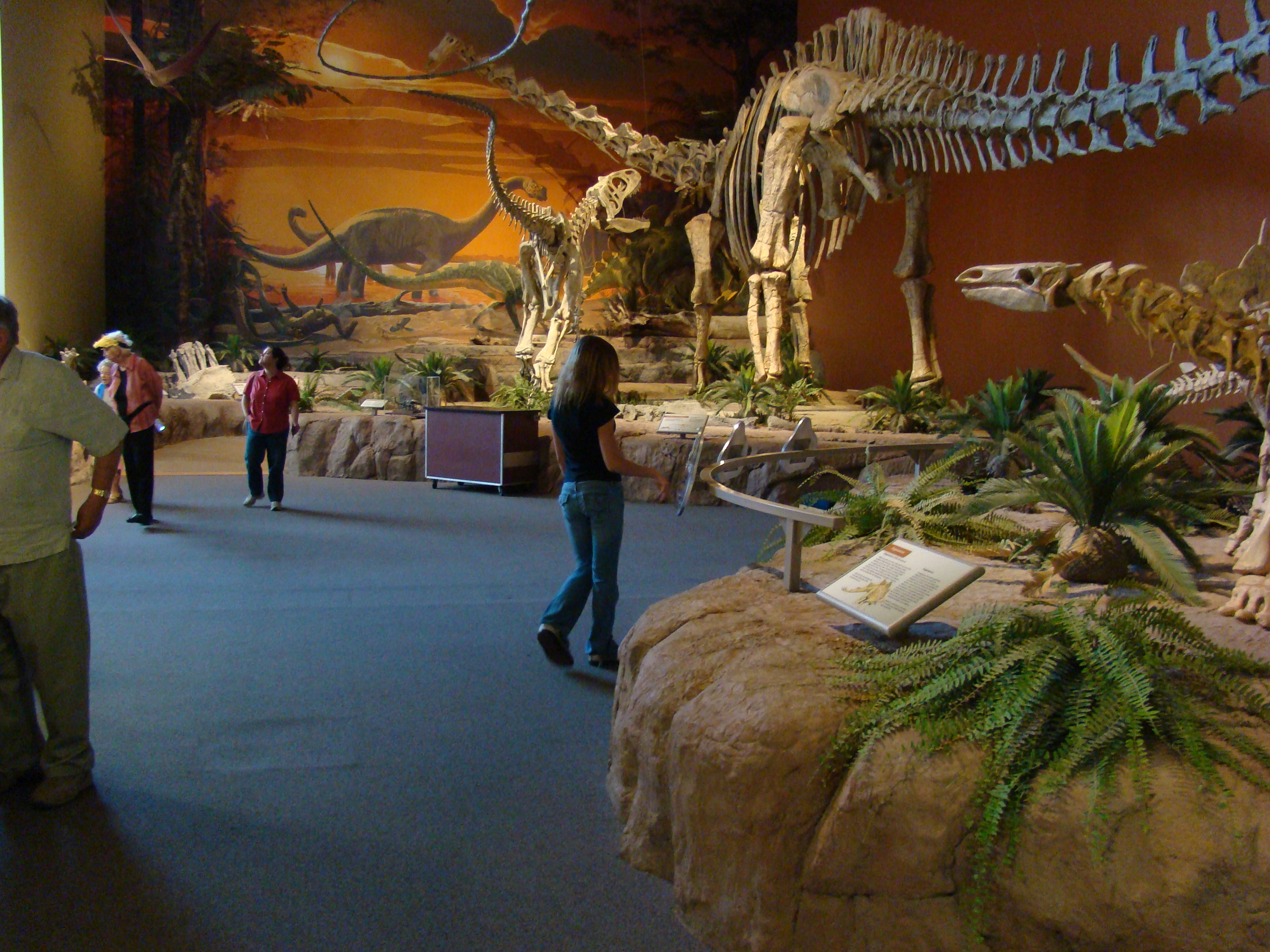
Jamie Harster exploring Jurasic Hall, 2007

If you’re at all curious about anything, how could you not love all this?  I find the place so mind simulating and magical that my creative juices don’t flow, they spill all over the place (liked that slippery ketchup).

If you’re a writer and you can’t find a plot here, you’re probably brain dead. Think about this, snakes keep tying themselves into knots and your protagonist who’s afraid of all reptiles needs to find out why. Sounds like good sci-fi, doesn’t it?  Check out the link.

On a more practical level, do you think gas prices (fossil fuels, at that) are too high? Then run your vehicles run on water.

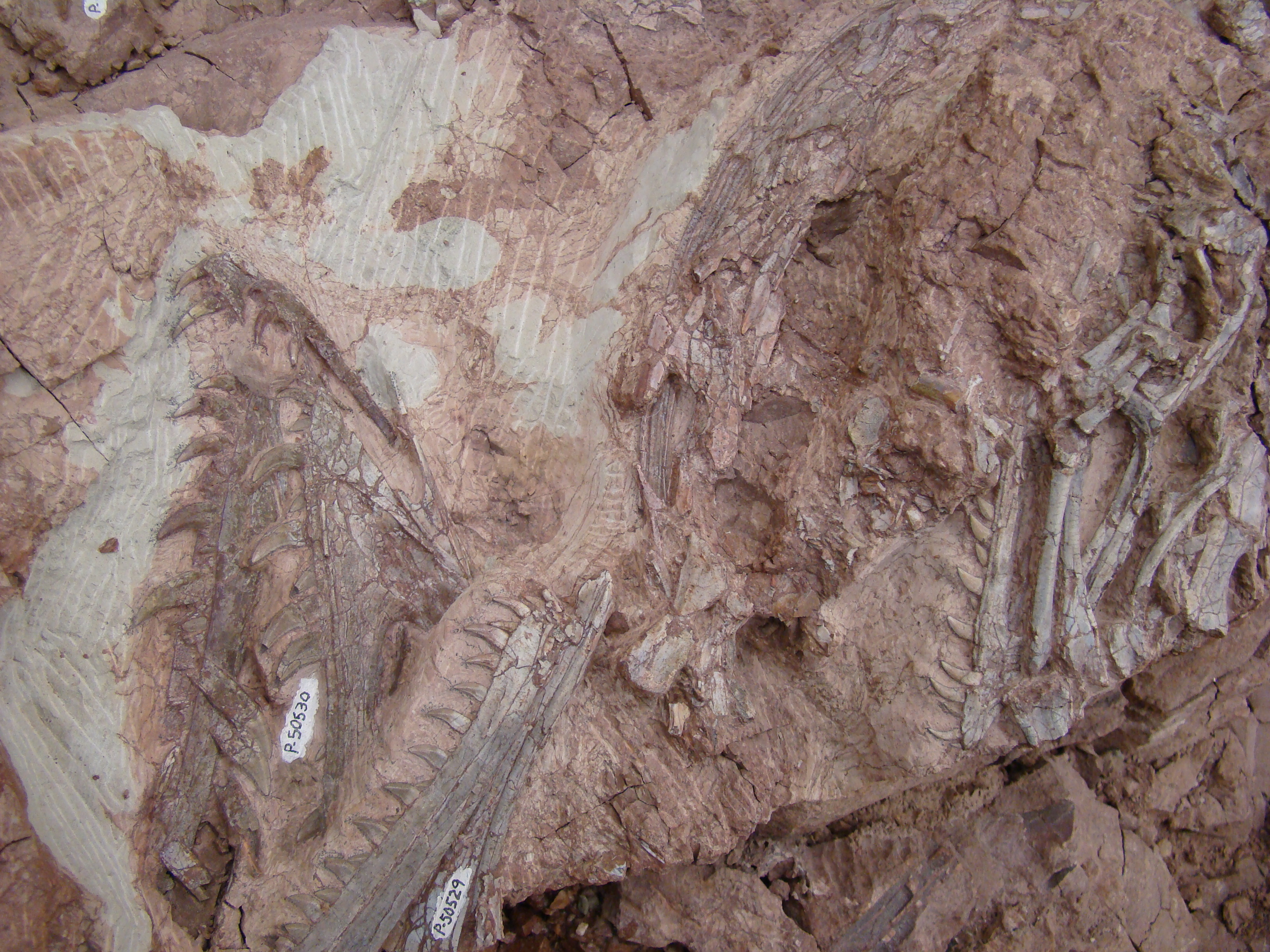
NM state fossil still in Triassic clay from Ghost Ranch, NM

If you’re not from New Mexico, you may not know about Ghost Ranch.  New Mexico adopted a dinosaur found there as the state fossil, the small coelophysis.

Doesn’t it sort of sound like a state pet?  We finally found our pet that died around 200 million years ago buried at some place called Ghost Ranch–creepy, cool, clever?

Muriel Bradbury, J. K. Rowling, and Nevada Barr are authors of different genres and each developed plots around special places. I bet you’ll find NMMNHS a special place where plot ideas lurk everywhere, even on their Facebook wall. If you want an out-of-this-world experience, spend some time in the planetarium. NMMNHS is truly a place to stalk schemes for your book.

How many authors find inspiration from special places?  Is this a factor in your own writing?

Posted in Scheme Stalker | Tagged , , , , , , , , , , , | 4 Comments