Defining Our Differences: Another Test For You

I pulled out my car keys and started out the door.  My husband stopped me and smiled.  He handed me a map because he knows me well.

Portion of painting by B. Bell

I usually have a good sense of where I’m going and how to get there and I don’t care that I have to drive around a lot to find the right access.   I call it, “–taking the scenic route.”

But he would prefer  to read written directions with mileage, road numbers, and all the turns listed. And he would have called ahead to make reservations . . . Wow!

Thanks goodness we’re all different because the world needs accountants, engineers, and computer programers. I’ll tell you right now, these jobs are completely out of my league.

What about you?  How would you describe yourself? Do you prefer order and predictability? Do you prefer working independently or maintaining harmony in group settings? Do you use your intuition or prefer to research and follow directions?

The Bell and The Curve

Individuals seem to have learning patterns that help them make life choices.  Even though we all share common strengths and abilities, our own preferential patterns emerge and embed us in our comfort zone.

Have you had to work with someone in a job who wasn’t the right fit for the position? That person soon becomes miserable or makes everyone else around miserable.  What about those relationships full of friction because one partner expected the other to understand and see the world in the same way he/she sees it.  And what about the parent that says, “I don’t know what’s wrong with that kid.  I swear she was switched at birth.”

Anthony F. Gregorc, Ph. D. is internationally known for his model of how the mind works with learning styles.  I find his research phenomenal because it explains  much about our frustration level. Think about when someone expected something from you that felt dreadful but then you looked around and saw others who found delight in that same request.  Alarm bells, think brain-comfort-zone because of different learning styles.

Gregorc breaks the organization of the mind’s style down into perceptual quality and ordering ability.

Perceptual: Are you most comfortable in perceiving the world through concrete methods (think five senses and the obvious, not looking for hidden meanings)?  Or are you more comfortable in perceiving the world through abstract means (think intuition, imagination, and subtle implications)?

Ordering: Given information, does your mind organize with a step-by-step approach?  Do you always have a plan? If this is how you almost always proceed, then you may find comfort in being sequential.  Does your mind look for pieces of the picture,  do you often skip parts of a procedure and amaze your family and friends with desired results? Sometimes, and maybe to your detriment, do you start in the middle or at the end? Then, my friend, you are probably rather random.

The ingeniousness of Gregorc’s assessment is that you aren’t specifically pegged as one or the other.  This process shows you your tendencies in all the areas based on a force-choice word selection process.

Remember the last post when I talked about vocabulary and fluidity of intelligence?  Well, your learning style preference isn’t a fixed part of your mind either. This has nothing to do with intelligence, and one learning style isn’t necessarily preferred over another.  As they say, “It’s all good”.

I’ve taken the full-blown authentic Gregorc Assessment for Style Delineator three times now.  I’ve found my style preference changed dramatically from when I was a classroom teacher and then became  an administrator.  My learning styles stayed pretty much the same when I left the administration position and became an adjunct professor at a college and an educational consultant for a publishing company.

If you want to play around with a free sample version of Dr. Gregorc’s learning style assessment model, here’s your chance. Your learning style.

Once again my work situation is completely different.  Now I spend most of my days writing or creating. I tried this quick free assessment and found my learning style has reverted somewhat closer to where I was as a classroom teacher.

Sometimes the job defines us–whoever first said that was right on.

Why is this important to me as a writer?  If you want your characters to be true you can’t have them in situations where they would never go.  And think of the mischief your characters can create when one partner’s learning style is completely different from the style of the other partner.

The four main categories of learning preferences that Dr. Gregorc offers us gives us a new dimension for character development and might even help us smooth out some of our relationships.  So take a risk and discover something interesting about your own mind.   I’d love to hear any anecdotes you have that are related.  Please comment below–and if you like this then sign up at the column on the right to follow for future fun.
Posted in Pen Points, Scheme Stalker, Stress test | Tagged , , , , , , , | 3 Comments

How Intelligent Are You?

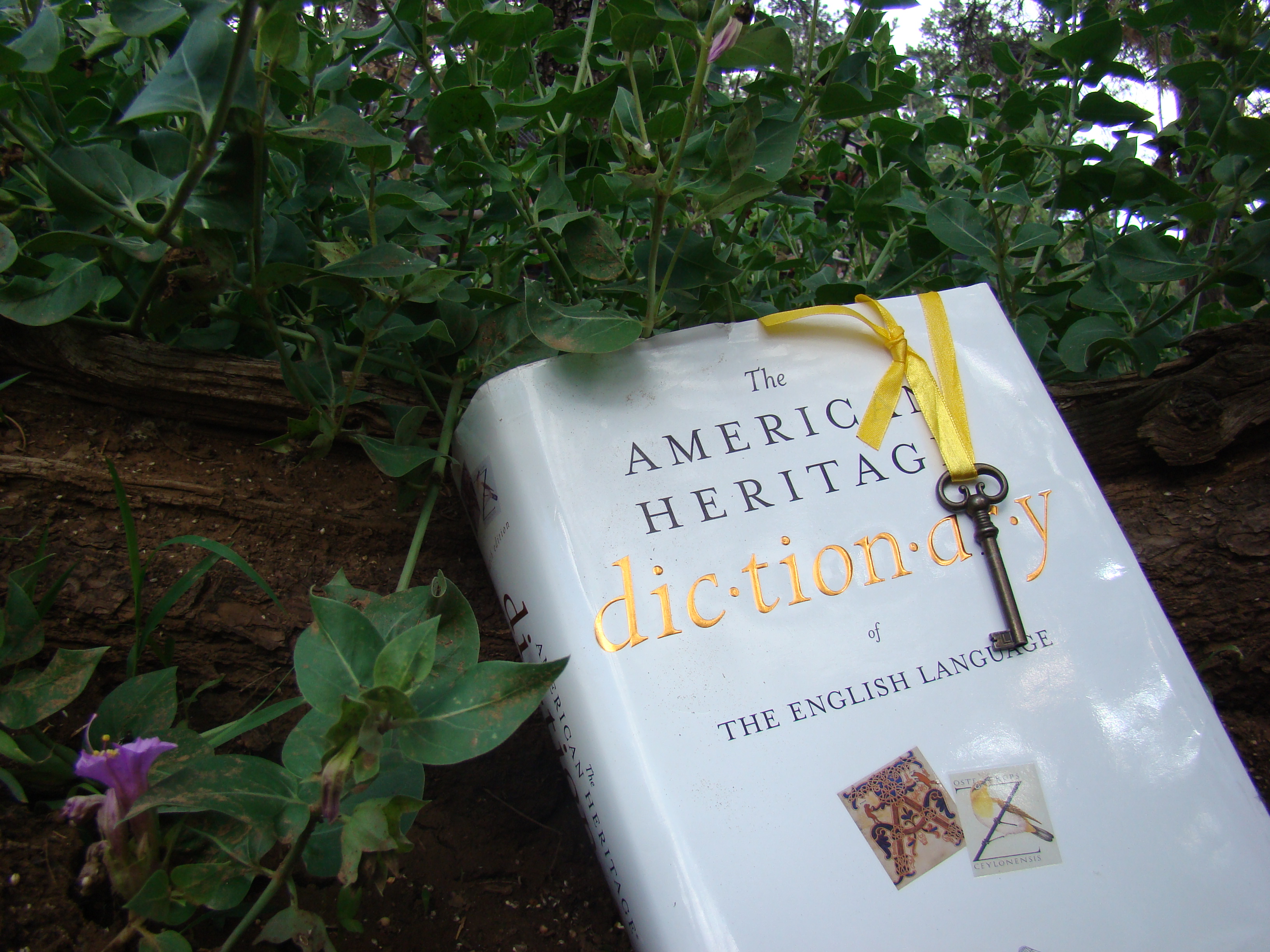
Yikes! it’s the  photo of the white dictionary again (from the post two weeks ago).  But notice the key. I discovered that students who were erudite with words usually found the key to accomplished their goals.  But that was no surprise.

Unlock Knowledge

A person’s strong vocabulary is a way to access his/her  intelligence.

But then that’s no surprise either. We build on a foundation of understanding, and the more we understand  the more knowledge we acquire. Thus, the more we know, the more intelligent we are.

But here’s the thing, our intelligence isn’t a fix amount of something.  It’s dynamic, it fluctuates, and that’s probably dependent on our state of health, our emotional status, and our changing environments. It’s very much a part of what we do and what we’ve done.  The more experiences we have, the more enriched our life, and the more we will know.

In my post two weeks ago  (Are You a Wordsmith?) you had the opportunity to test your vocabulary skills compared to others in your age group.  Here’s a website that gives you a new word a day and also has a ten-item vocabulary timed test.  There are many of these sites out there, but I like this particular one because if I’m in the mood I can take the ten-item test over and over (the words change for each test).  Again, you can compare your score to others in your age group. I think getting a new word for each day is rather cool, too.

When we write, we’re cautioned to not over state, “My computer program blew up.” When we mean, “I found an error and my program failed.” And we’re warned against using complicated nouns when simple ones work better.  Just watch television for a few minutes and the reason is obvious:  rain = a high likelihood of precipitation, meeting = conference to facilitate communication, and fired=terminated.

When you improve your vocabulary, you increase your ability to make the right word choices for what you write.  If you know the shades of meaning of different verbs, you’ll write with strong verbs that can do the work of weak ones without those “ly” adjectives. “He angrily walked out of the room.”  “He stomped out of the room.”

We need to keep that collection of new multi-syllable words out of our writing, but they do help us to understand and build other word connections.  When that happens, our writing becomes stronger. We want to make our writing coruscate.  Besides, it’s rather fun to impress friends and family.

Have fun with the word of the day and the  ten-word quiz at this website.

Posted in Pen Points, Scheme Stalker | Tagged , , , , , , , | 1 Comment

Do You Know The Feel?

Have you squinted your water-filled eyes against the whip of mane and wind?

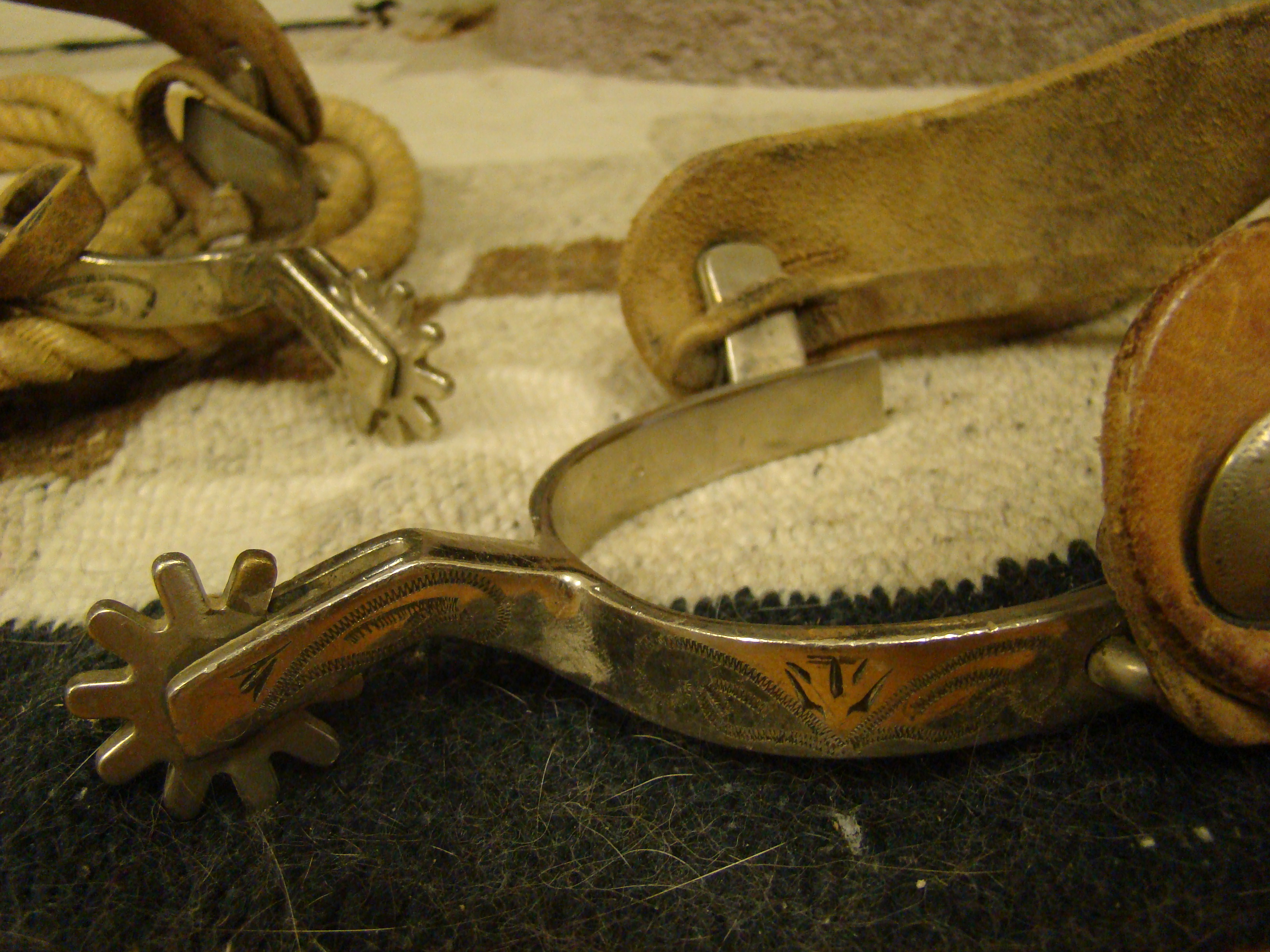
Old silver spurs

Have you experienced the pull and lurch of horse muscle beneath you as your mount strides out and up the mountain side?   Have you learned how to move as one with the strength and power beneath the saddle as your four-legged companion picks the way down a steep slope?  Do you sit fast or bounce to kingdom-come when you’re on the back of some magnificent animal who received its how-to-trot lessons from a sewing machine? Have you longed to chase desperadoes and bring them to justice?

If you’re one of those city-slicker dudes, rest assured.  You can be the pro at this in the safety of your own home.  The Walt Longmire Series by Craig Johnson brings the living experience of the horse, the land, and the angst of the chase to you in hard-copy book form, audio book, and now as a television series.

You can read about this in many places but there’s no better place than the newspaper article from Craig Johnson’s home state, Wyoming, where the stories take place.  We Wyoming people are mighty excited about this, Craig.  I bet you used two nails to hang up that horse shoe over your door.

Posted in Pen Points | Tagged , , , , , , | 2 Comments

Are You a Wordsmith?

If I were a wordsmith I’d probably know the difference between fuliginous and funambulists.  My computer’s spell checker doesn’t recognize those two words either.

Nor does my little pocket dictionary.

But I know the word lignite.  That’s a clue for fuliginous, don’t you think?  I know what fun is, but I suspect ambulatory is a better clue for funambulists.

Why’s this important for writing well when all the experts say don’t use big words when little ones will do?  Common words make the read faster, snappier, and easier to understand, unless there’s a bunch of prepositions, adverbs, adjectives, and common qualifiers junked in with them.

When you tell someone to sit down, is that opposed to sit up? Sit works fine by itself.  Why say someone stepped down when resigned works?  Eliminate the clutter.  It helps your reader stay riveted in your book world.

So what’s this wordsmith talk about?  It’s about using precise words.  Words that count. The more words you know, the more words you have at your fingertips. Powerful verbs describe better than any string of adjectives: slither, vex, beguile.  Some words have shades of meaning. If you know them, you can shine a light on the one that best describes your meaning: saunter, swagger, step, skip, hop, meander.

And here’s the thing: Primary school children need to learn 2,000 new vocabulary words a year just to keep up.  That’s a lot of words. What about the adults?  How many words does the average English-speaking American adult know? What about the adults with college degrees?  What about you?  How many words do you know?

Are you curious?  This site gives you statistics and you can test your own vocabulary then match it with others in your age group.   Test Your Vocabulary   Go for it and have fun.

Posted in Pen Points | Tagged , , , , , , , | 5 Comments

Watch The Pages Fly

Anne Greenwood Brown shared a fantastic idea with Writer Unboxed 2011/06/29.  I read her Kicking Out a Fast First Draft.  This method propelled my second manuscript forward by seven chapters in three days.   Now how cool is that?

But here’s the thing, you can’t fly through your pages if you haven’t developed your flight feathers.  That requires some serious thought.

Here are five steps to earn your flight feathers before you  soar with Anne’s “trick” of writing fast.

1.  Figure out who your main players are and do in depth character studies for each.

2.  Figured out who the secondary supporting cast is and do character sketches on them.

3. Think about where and how your story begins and where and how it ends.

4.  Then use Anne’s percentages for structure and apply these to your plot line.  True confession, I’m not really good at figuring everything out before hand.  One of the trouble spots for writers is that sagging middle.  But if you use what you’ve learned from your manuscript’s beginning and what you’ve decided about the end, along with your character studies, you’ll know what “your gang” will do in any given circumstances.  Put that knowledge with Anne’s percentages and you’ll have a strong middle that creates questions and tension where you need.

5. Keep your brain on high alert to spot useful ideas and at the same time keep your brain churning with “what ifs”.

Anne Greenwood Brown’s idea for getting your manuscript down on paper before you do revisions or add the details that give depth and color is a gift to many of us who’ve taken years out of our lives to create a polished piece for publishing.  I suspect I’ll have my next manuscript completed and ready for the editors in just a matter of months, not years.

Posted in Pen Points | Tagged , , , , , | 3 Comments

KNEW

Keep a notebook.

Notice little things.

Extrapolate to larger world.

Watch for opportunity.

Did you ever laugh at a small bird chasing a huge bird?  Did it remind you of maybe a little Volkswagen Bug chasing a Mac truck?  Pretty comical–like, what would it do if it ever caught it?

My boxer dog, for months, chased pheasants out in the alfalfa field behind our home in Wyoming.  My horse and I came upon this silly dog early one morning.  He stood in our lane, his front legs splayed and in his mouth he held a huge cock pheasant. Both animals’ eyes were wide and blinking.  The dog met his goal, but had no clue what to do next.

Keep a notebook: You noticed a little bird chase a larger bird, and you recorded it in your notebook.  This incident made you laugh when you drove down the highway and first saw it.  But what use is this information to you?

Notice little things: When you see tiny birds chasing birds ten times their size, they have no intention, nor desire, to catch the beast they pursue.  They just want it away from their nests.  The larger bird will probably give up because staying around isn’t worth the bother.

Extrapolate to larger world: Think about the universal picture of this small entity in triumph over the larger.  Where does this come into play in your writing?

Frank Herbert in his Dune series created a terrific saying, “Fear is the mind killer”.  The smaller bird put fear aside and did what needed to be done to protect its offspring.  Isn’t this what happened to a rag-tag army of fathers and sons who put down their plows and went to war against the British war-machine during our colonial America times?

Watch for opportunity:  Your manuscript screams out for your protagonist to be in a tight spot.  How tight can you make that situation?  How horrid can the odds be stacked against your character?  What powerful motivators do you need that will drive your little bird to win? What about Lee Child’s Jack Reacher, Michael Connelly’s Harry Bosch, or any other of your favorite protagonists who face-larger-than-life opponents? Think about KNEW the next time you read one of your favorite mystery writers.

Question:

The hummer and the butterfly:  Drought caused a shortage of wildflowers this year.   Is the usually aggressive Rufus Hummingbird sharing limited resources, or is the butterfly being an opportunist? What do we do when there’s a shortage of essentials?

Posted in Pen Points | Tagged , , , , | 2 Comments