Defining Our Differences: Another Test For You

Several friends and readers are pestering me for more information about their learning styles. Yep, they are truly in my face about this, and they know who they are. Here’s my original post, which explains a bit about the four different learning styles and a shorten version of the “real” test. Have fun and please leave me a comment about how this sample quiz matches with your real life.

Char of inkydancestudios's avatarCHARLENE BELL DIETZ, Author: Inkydance Studios

I pulled out my car keys and started out the door.  My husband stopped me and smiled.  He handed me a map because he knows me well.

I usually have a good sense of where I’m going and how to get there and I don’t care that I have to drive around a lot to find the right access.   I call it, “–taking the scenic route.”

But he would prefer  to read written directions with mileage, road numbers, and all the turns listed. And he would have called ahead to make reservations . . . Wow!

Thanks goodness we’re all different because the world needs accountants, engineers, and computer programers. I’ll tell you right now, these jobs are completely out of my league.

What about you?  How would you describe yourself? Do you prefer order and predictability? Do you prefer working independently or maintaining harmony in group settings? Do you…

View original post 678 more words

Posted in Uncategorized | Leave a comment

Mysterious – Altruistic Children of the Amazon

We woke to rain . . . a steady drizzle . . .  7 Amazon   (65)The tucked away villagers waited near the inlet to welcome the morning visitors to the slippery grass and mud covered slopes. Children scrambled down to the dock, hands outstretched, grabbing elbows and arms of the foreigners who disembarked the ship’s tenders.

Most tourists voiced surprise and gratitude at the little ones’ help in keeping them out of the mud and also upright. A few visitors pulled their arms away, held their belonging close to themselves, and shifted their gaze to the countryside.

Then the canoes came. They came from obscure villages up and down this part of the Amazon River. They wanted to see, to be next to, the ship anchored off shore and perhaps to sell a few handmade wares.  I expected but didn’t see a single palm held up–begging for a handout.

Amazon River Children with a young sloth.

The next morning dressed in long sleeves, long pants, hats, and hiking boots, a group of us  went up the Amazon River to an unknown destination. There we would dock on a beach and spend the day learning about jungle survival.

On the boat was a young girl. She looked like any child off to spend the day in her red, Minnie-Mouse shirt and shorts. Her dark curls were tamed by a pink flower barrette.  To her, the world was a happy place.

Amazon River trip from Manaus to jungle destination.

Amazon River trip from Manaus to jungle destination.

She spoke only Portuguese. None of us knew her name, but her communication skills captivated each of us.

She held an assortment of duplos, big leggos for the younger set. She didn’t seem interested in building with them because her imagination took her somewhere else.

She handed duplos to several passengers and showed them what to do. To her, they were musical instruments.

Soon the passengers were playing a riotous rendition of Jingle Bells while others without her plastic instruments sang. By the end of our boat ride she, too, chanted these repetitive English verses.

We didn’t know her father would be our jungle guide.

8 Manaus Jungle treck 1 (44)

When we entered the jungle from the beach, we climbed forty-five, ant covered stairs. December is the dry season. In June the beach would be under water and the dock would be at the top of the stairway.

Before entering the jungle, one of the guide’s sons stood next to me creating something out of palm leaf. When he finished he handed it to me and smiled. His talents included making leaf snakes and crowns with feathers.  His only reward seemed to be the delight he saw on my face.

8 Manaus Jungle treck 1 (41)

At the end of the afternoon when we came back down the ant covered stairway, the two young boys and the girl from the boat ran to us, dropped on their knees, and picked ants off our boots and socks.

Still, not a single hand thrust out for even a coin. Later on, when we visited other villages, the children would wish us Bom dia or Boa tarde. How mysterious. What causes these smiling children to engage with strangers and the world around them with such happy innocence?

All I can say is, “I love your river and it’s people.” And to the children’s parents and their village elders, I say, “Obrigada.”

Posted in Uncategorized | Tagged , , , , , , , , , , , , , , , | 2 Comments

Happiness Revisited

Happiness Secrets and the Study of Natural and Synthetic Happiness  posted on February 8, 2013 evoked a comment about the use of the word mastery in i09’s article listing six ways to be happy. Michael, 0424 056

Is the use of the word mastery here incorrect? Can anyone  reach that lofty goal? If you personally can’t be the ultimate master of what you’re trying to achieve, is that failure?

Being rather compulsive (I don’t think I’m that obsessive, but compulsive–yes) I had to click on the link and reread that i09 article. Here it is.

I believe this i09 article throws out a help-line for creating long-term happiness.

#2. Master a skill

This one is kind of a tradeoff: a study published in a 2009 issue of the 100% real Journal of Happiness Studies found that people who dedicate themselves to mastering a skill or ability tend to experience more stress in the moment, but reported greater happiness and satisfaction on an hourly, daily, and long-term basis as a result of their investment.

“No pain, no gain is the rule when it comes to gaining happiness from increasing our competence at something,” said Ryan Howell, assistant professor of psychology at San Francisco State University in a statement. “People often give up their goals because they are stressful, but we found that there is benefit at the end of the day from learning to do something well.”

Its main message is to dedicate one’s self to mastering a skill or ability whether it’s ever deamed masterful by others or not. We all know someone out there may beat us at our own selected game. That doesn’t matter.

I look at our aging population and I see some pretty grumpy faces. Those with perpetually happy faces seem to be those who are working diligently to improve a skill or learn something new. They aren’t struggling to be the master-of-all in this endeavor, but they are passionate about mastering the activity for their own emotional needs.

There’s authentic joy in knowing you’re achieving and improving even when that climb to reach beyond mediocre creates stress. But don’t be fooled into thinking you’ll become more masterful at something if you just practice.  You might find yourself sweating up a storm while others walk away with the prize.  What’s missing?

At a certain level of knowledge practice helps, but to gain a deeper level of understanding for actual improvement you have to research, study, practice, and reevaluate–then make a return trip back to do more research, study, practice and evaluation. This is true for most everything, writing, drawing, building bridges, golfing, raising hogs, or tightrope walking. Yes, it’s work. Yes, it’s stressful, but that development of joyful passion wins hands down over the depression of apathy and your giving up.

My suggestion is to make mastery an endpoint or goal but not the definer of your life. Trust me, being a perfectionist would push me into the crazy world.

Those of us who have developed a passion for creating, exploring a new intellectual challenge, or learning a new skill may have to settle for being a jack-of-all-trades and maybe a master-of-none.  But it doesn’t matter because when you find us stressed out you’ll also see we’re the ones who have mastered that happy side of life.

How do you create long-term internal  happiness?


Posted in Uncategorized | Tagged , , , , , , , , , , , , , , , , | 4 Comments

I Hear Voices Part III

I used to teach teachers how to teach writing. They’d ask, “How do you give the characters’ different voices?”

Wikipedia photo

Wikipedia photo

Simple answer: listen to how words are used, listen to how words are said, listen, listen, and watch.

Tempo: Whenever my grandfather spoke it didn’t matter if the story was happy or sad. He spoke in a slow, deliberate, and low voice punctuated with deep short chuckles.

One of my closest friend’s voice is a soft machine gun that never stops to reload unless she takes time out for a room-filling laugh.  Another friend’s tone emanates like a headmistress, unless she’s had a few glasses of wine. Then she sounds like my too friendly hairdresser.

Dialogue:  Over heard on a bus going to downtown Key West:  Man: “We’ll be going past that fabric shop.” Woman: “Don’t care now.”  Man: “But yesterday you said–” Woman: “I told you, I don’t care.” Man: “We could stop for a few minutes.”

Woman to another in a restaurant: “See him, that tall one over there?” Second woman nods. First woman: “Don’t look, turn around. I think he’s emotionally wounded. Did you see that scar on his face?” Second woman starts to say something but the first woman cuts her off. “Whatever happened to him emotionally caused him to spend time in prison.”

I have dozens of notebooks filled with converstational snippets from strangers.

But how do you write about something when you don’t have any contextual experience?

Dialect: A friend  in the sheriffs department told me terrific tales about some closed cases.  One involved the disappearance of a rooster.  He didn’t go into details about the reason someone might steal the man’s rooster, but he shared the ending of the story with me.

This story was too good to leave alone. I knew nothing about cock fighting, didn’t understand how people could be so cruel, and had no idea how anyone involved in such an activity could justify these actions. But I knew this was my story.

My big problem was that I didn’t know the lingo, the jargon,or the people in the world of cock fighting.

Google to the rescue! I discovered a defunct magazine that dealt with cock fighting. Then I discovered  some threads and forums. The forums gave me the voices of real people who argued about the current trends to ban cock fighting

I can’t think of a better way to capture the tone, the emotion, and even some rational arguments about how they clearly didn’t see anything wrong with that so called sport. After reading several of these I was off and writing an award winning  short story for the Writer’s Digest Crime Competition.

It doesn’t matter if you just write emails, letters, instructions, or novels you’ll want your voice appropriate for your audience. If you’re writing dialogue then eavesdropping on strangers, keeping notebooks on conversations, and lurking on forums or threads can be your key for the right tone and dialect.

Voice is the sparkle, the glue, and the life in any writing. Writers have lots of tricks for putting the voices in their heads on paper and making them believable.  What are your tricks?

Posted in Pen Points | Tagged , , , , , , | 4 Comments

I Hear Voices Part II

Body language is a powerful voice: You’re at this party telling your friend something you’re quite passionate about.  He stares at you and lifts both eyebrows, just a little.  Now you’re annoyed.

He’s just showed you he’s skeptical about what you said. This can be more infuriating than if he’d come right out and argued with you.
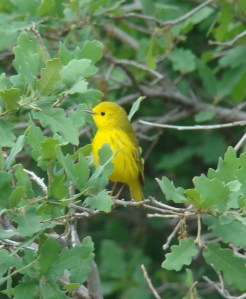
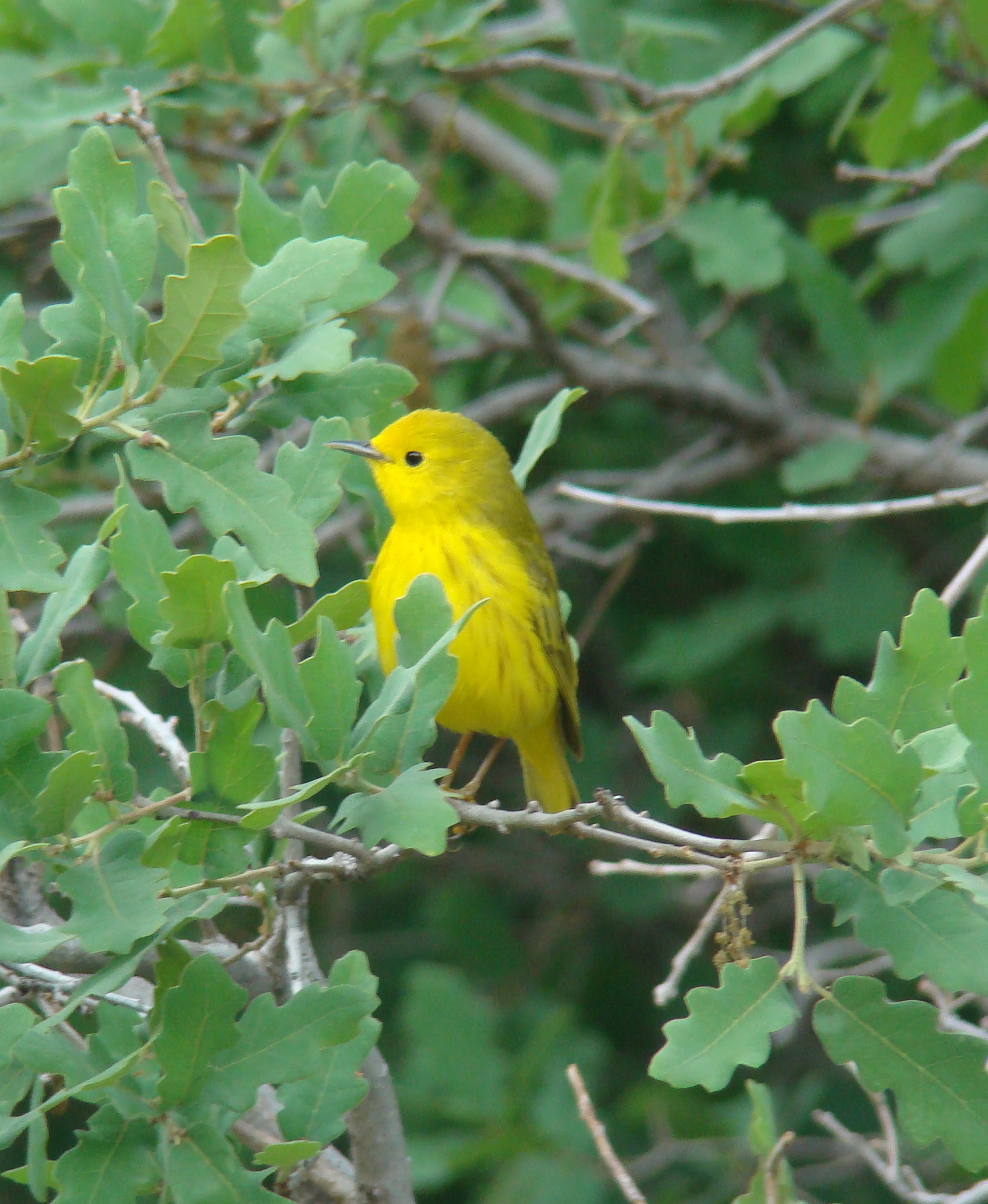
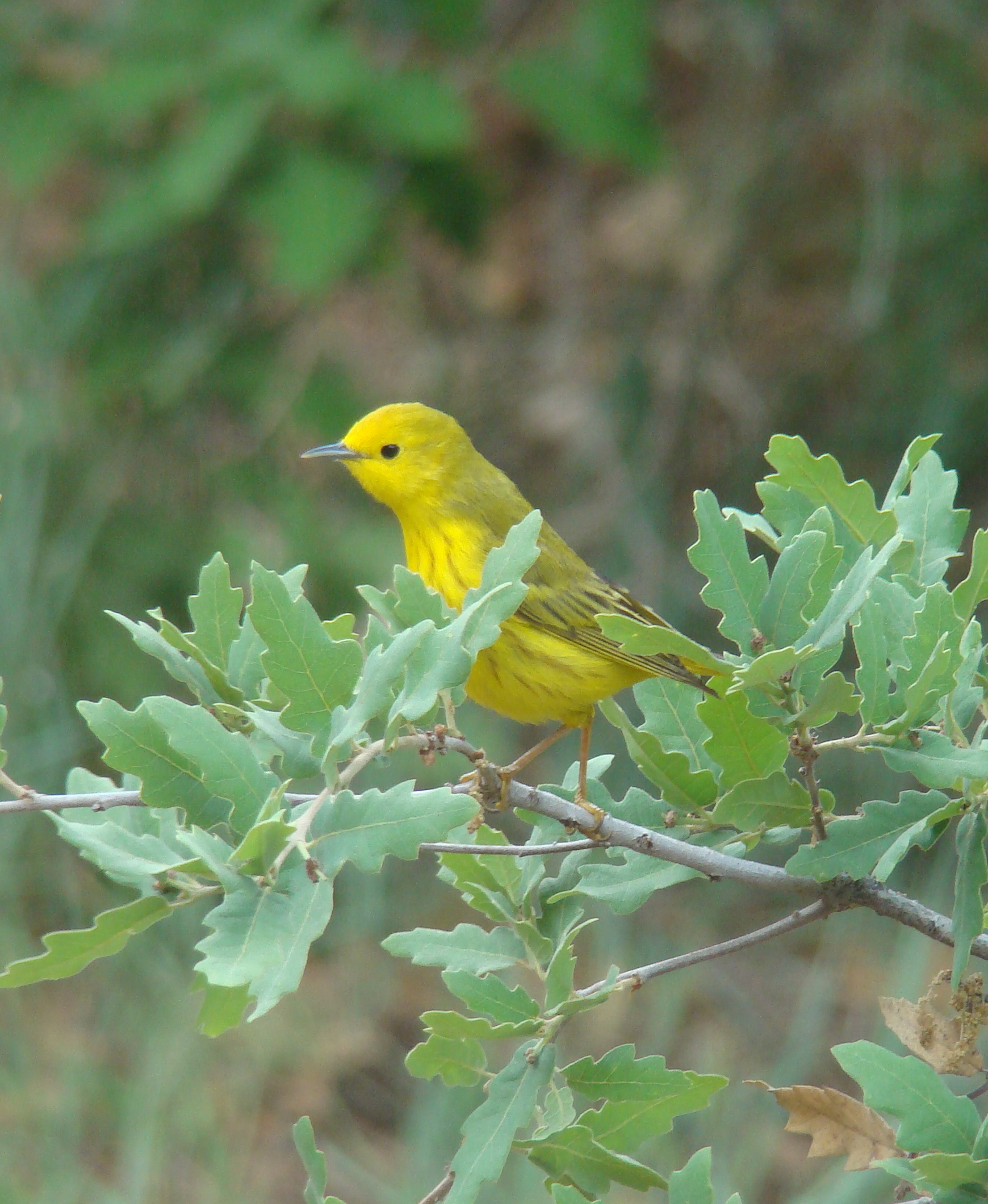
warbler at ease

warbler at ease

We all use body language: Toddlers pout or slam things around when they’re unhappy.  They can’t access the words yet, so they let their actions get them what they need.

Wild and domestic animals let their actions/behaviors tell others what they need, too.

The problem with animal “talk” is that most of us don’t listen, nor do we believe unless it’s something we’ve known forever.
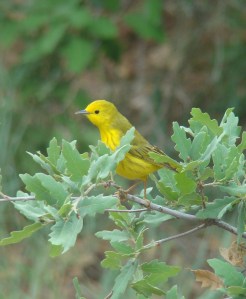
warbler on alert

warbler on alert

We  recognize our dog’s happiness. She wags her tail when you come home, jumps around when you get her leash, and some dogs even smile. We know when they go belly up they either want a tummy rub or they’re being submissive.

If they’ve strewn contents from the waste basket all over the house you can bet that belly-up routine is anchored in their genetic memory. They don’t want to be kicked out of their pack (aka your family) because they’ve misbehaved.  Being kicked out is usually a death sentence for many wild animals.

When you’re asking your dog a rhetorical question like, “Do you want a treat?” and your dog sneezes, that means something.  For years I wondered why my dogs did that. Finally I understood.  A sneeze means, “Yes!”  Check this out with your own canine.

Sometimes your dog gives his skin a vigorous shake. Bet you’ll find he does that when you let him know you’re going to do something with him.  It’s like he’s saying, “Okay, I’m ready!”

Research: My daughter-in-law gave me a silly gift once, a dog translator called a Bow-lingual. (It costs between $20 to $49 depending where you buy it.) It’s two devices. One is put on your dog’s collar and the other is your receiver that interprets noise your dog makes.  It was developed by Dr. Suzuki of the Japan Acoustic Laboratory where he analyzed over 5,000 dog vocal noises in consultation with animal behaviorists.

The reviews on Bow Lingual range from good to horrid. One video shows a dog’s master playing with the dog when someone knocks at the door.  The dog half-heartily barks and goes to the door.  Then sits and stares back at his master.  The conclusion:  Bow Lingual didn’t work because it translated the dog’s bark into, “I’m sad.”  The owner said the dog was always mad when someone came to the door.  Personally, I think the Bow Lingual translation was spot on. That knock interrupted his playtime.

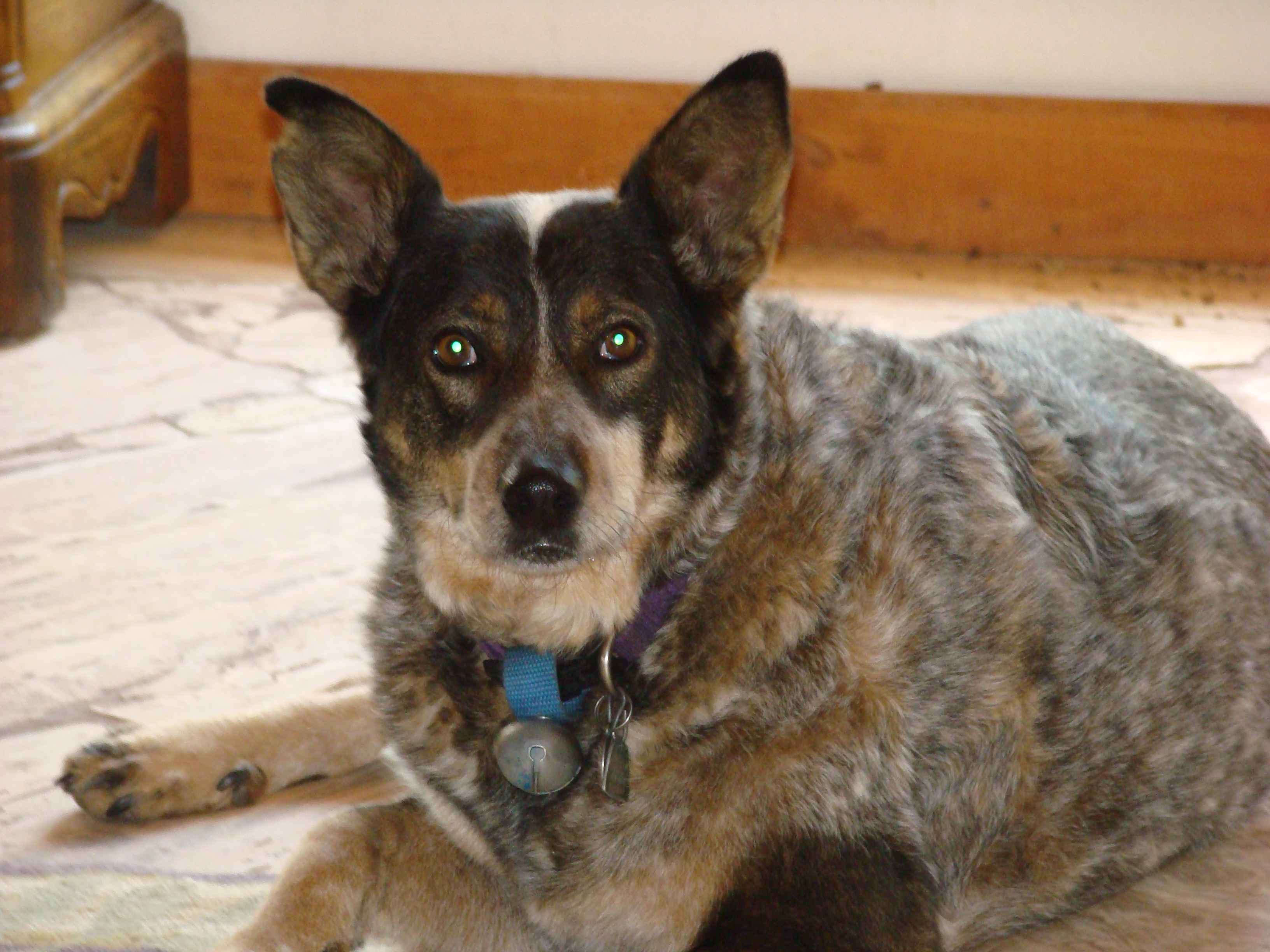
Family members visited us with their dogs. My dog, Nonnie, seemed despondent. I put the Bow Lingual on her.  When one of the other dogs came too close to her the readout said, “I’m not happy.”

Nonnie

Nonnie

One dog kept bulling her in subtle ways. When the readout said, “Careful, I might bite.” I decided it was time to give her special attention.  We went for a walk, and a few yards from the house she spied something small and pink.  She rushed over to it, sniffed, then turned away.  The readout said, “That’s not what I want.”  It was a paint ball left by one of my grandchildren.

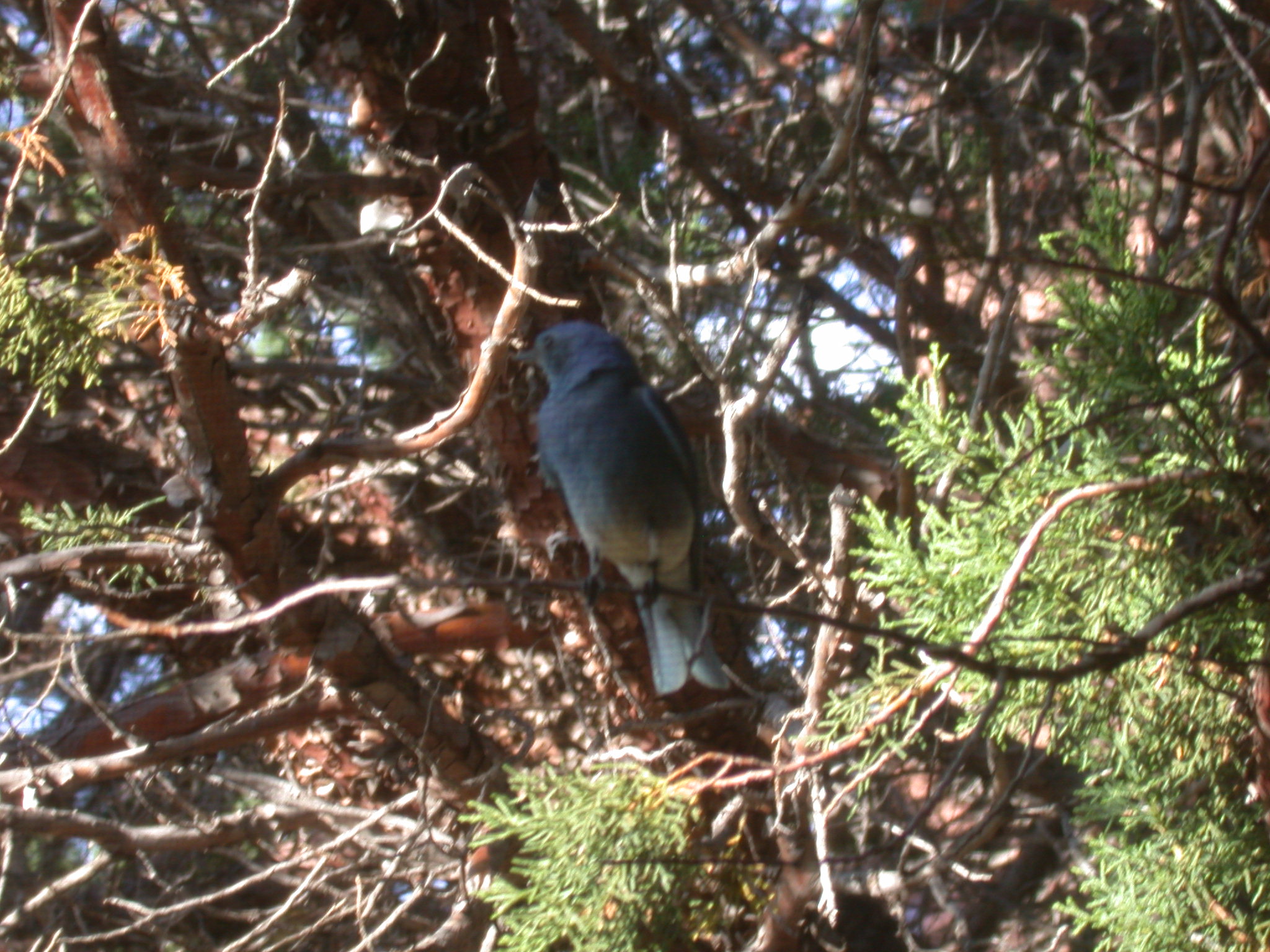
Unexplainable: Once a male bluebird kept pecking at my studio window where I sat working on my computer.  The window was open so he wasn’t fighting his reflection. He’d peck at the screen, sit on the tree branch, then fly to the screen and peck some more. I was baffled.
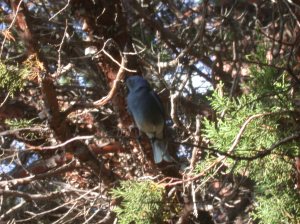
Male Western  Blue Bird at my window

Male Mountain Bluebird at my window

My husband showed me a female bluebird pecking at his office window, too.

Bluebirds are fragile creatures.  We’ve put five blue bird houses on our land to help protect them.

We stared at each other then dashed out the door and started checking each box.  One of the boxes had a nest with two eggs.  The wire holding it had broken and the box tilted pecariously to one side.  A male and female bluebird watched from the top of a tall pinon tree while we repaired the little house.

You may draw your own conclusions, but I don’t care to underestimate the intelligence of these little creatures.

Whether you believe in the accuracy of  something like Bow Lingual, or not, we do know that when animals make noises or change postures it does mean something. The same is true when people make noises or change postures.  When we care to listen we can hear unspoken voices.

What does this mean for writers? Maggie Smith in the television series (Season Three) of Downton Abbey picked up a Christmas Card, glanced at it, then set it back with a dismissive wave of her hand. This left the viewer wondering what she’d found offensive with that card.  Think about it, that simple act brought the viewer right into the action for a moment.

When a writer shows an emotion the reader becomes more involved than if the writer had spelled it all out by saying, “She knew those relatives didn’t wish them a Merry Christmas, or for that matter, wish them anything merry at all.”

When I watch visually rich productions like Downton Abbey I study the body language to find new ways to show emotion in my writing.

How do your readers know what your characters are feeling? 

(Next: I Hear Voices Part III–Finding the True Voice)

Posted in Uncategorized | Tagged , , , , , , , , , , , , , , , , | 2 Comments

I Hear Voices: Part 1

I’ve always heard voices. I’m sorry for those who don’t.

Remember those lazy years when you didn’t have to clean house or pay taxes?  I mean those years way back when you woke up knowing the neighborhood kids were already outside. 2012 May You’d rush barefoot outside to–to do nothing.  Maybe you’d sit in the apple tree and chuck apples at everything or loll around in the new growth grass to contemplate that ever pressing problem, “What should we do?”

That’s when I discovered the stray cur wandering down the street had a story to tell.  But no one bothered to listen.  So I’d tell his story.

My parents said, “She’ll out grow it.”  2011 January Coyotes 033They were wrong. I live in a forest now where all the animals tell me their stories, and my tolerant husband knows I’ll never out grow this.

Writers need to hear voices, a variety of voices that suit the occasion. If you’re a technical writer, you don’t want to have a Phyllis Dillard or Andy Rooney voice.  If you’re a romance writer, you don’t want Arnold Schwarzenegger in your head.  If your sewer is backed up for the third time this week, you don’t want your letter of complaint to sound like you’re thanking your grandmother for the tin of chocolate chip cookies.

We each use a variety of voices when we talk: our parental voice, our professional voice, our playful voice, our social voice.2012 Nov.1Birds and Bees 002

No matter what you write, the first lesson is to write with a voice that’s appropriate to the situation.

Have you ever been taken back by some unexpected sounding voice that didn’t match your preconceive idea of the situation? This can be a great source for humor.


Posted in Pen Points | Tagged , , , , , , , , , , , | 2 Comments